
You’re not alone if you’ve noticed your beautiful fabric shades collecting dust and looking a bit dull. Between Cypress’s humid climate, seasonal pollen, and everyday living, window treatments work hard to filter light and add style to your home. The good news is that keeping fabric blinds fresh doesn’t require professional help for routine care—though knowing when to call in experts makes all the difference.
At All Prive, we help Cypress homeowners maintain their custom window shades year-round. This step-by-step guide walks you through everything from weekly dusting to seasonal deep cleaning, so your shades stay beautiful and functional for years to come.
Key Takeaways
- Regular dusting prevents buildup that damages fabric fibers and requires less frequent deep cleaning
- Different fabric types (natural vs. synthetic) need specific cleaning approaches to avoid permanent damage
- Cypress’s humidity means checking for mold and mildew should be part of your maintenance routine
- Most light cleaning tasks take under 15 minutes and use supplies you already own
- Professional cleaning becomes necessary for delicate materials, stubborn stains, or warranty concerns
Understanding Your Fabric Window Shades and Cleaning Preparation
Before you start any cleaning process, take a moment to identify what you’re working with. This knowledge protects your investment and ensures you choose the right approach.
Types of Fabric Window Shades Common in Cypress Homes
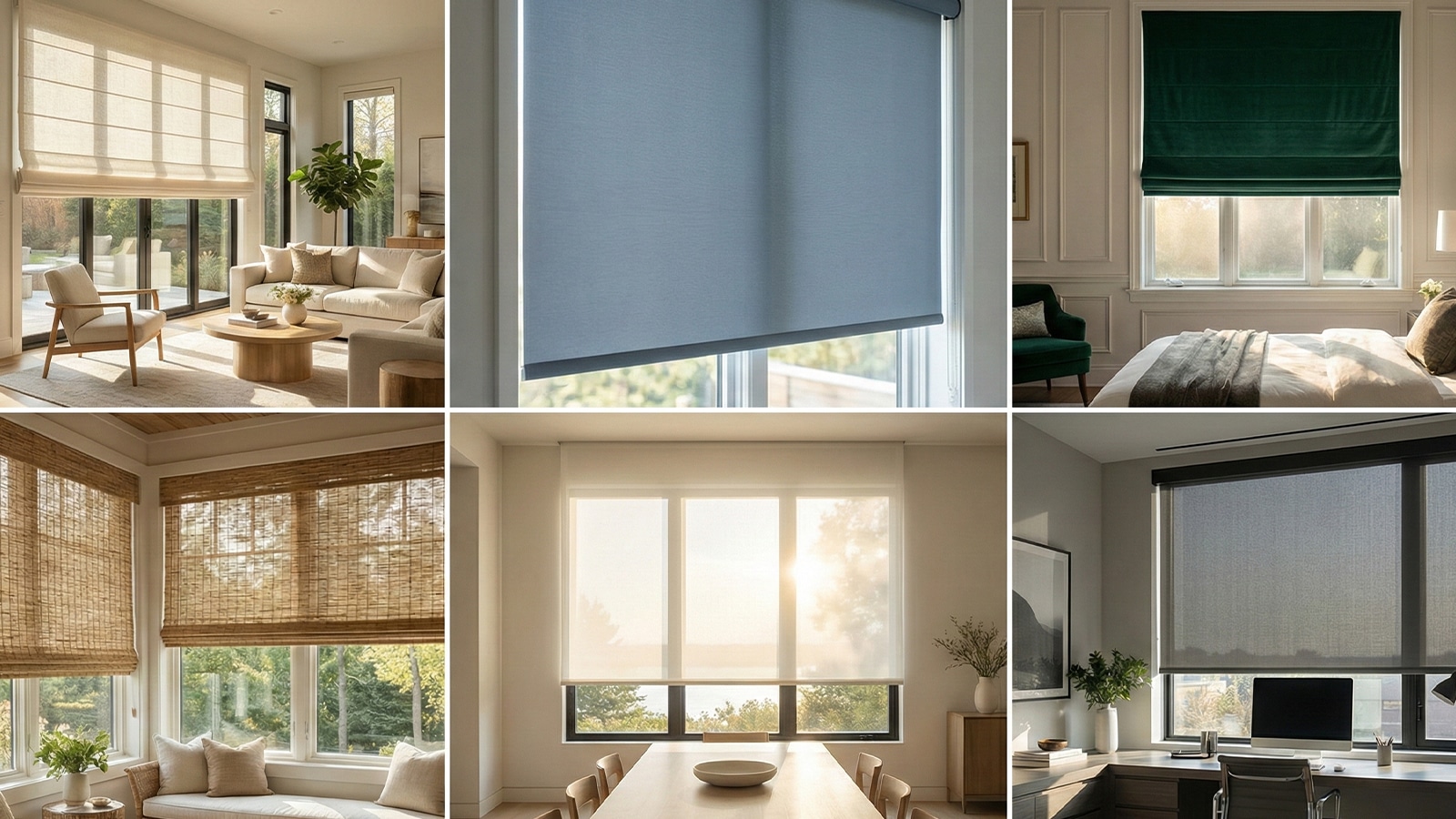
Cypress homeowners typically install roman shades, cellular shades (also called honeycomb shades), roller shade designs, or vertical fabric shades. Each style offers different benefits—cellular shades provide excellent insulation against our hot summers, while roman shades add elegant texture. Knowing your style helps determine how to remove and clean them safely.
Identifying Your Shade Material (Natural vs. Synthetic Fabrics)
Natural fibers like cotton, linen, bamboo, and jute bring organic warmth to rooms but require gentler handling. Synthetic materials—polyester, nylon, and acrylic—typically tolerate more aggressive cleaning without damaging the fabric. Check the fabric vertical shades by feeling the texture; natural fibers feel rougher and more textured than smooth synthetics.
Reading Manufacturer Care Labels and Warranties
Always check manufacturer cleaning instructions before proceeding. These labels tell you whether water is safe, if dry cleaning is required, and what temperature limits exist. Following these guidelines keeps your warranty valid—something All Prive always emphasizes when installing custom window shades in Cypress and surrounding communities.
Signs Your Shades Need Cleaning (Dust, Allergens, and Stains)
Look for visible dust accumulation along pleated fabric folds, discoloration from sun exposure, spotted marks from cooking or pet activity, or that musty odor indicating mildew. Cypress’s pollen season (typically February through May) leaves a yellow film on horizontal shades and fabric window coverings that needs prompt attention.
Gathering the Right Cleaning Tools and Supplies
You’ll need these basics for most cleaning tasks:
- Vacuum cleaner with brush attachment to remove dust gently
- Microfiber cloth or soft cloth for wiping surfaces
- Feather duster for quick touch-ups
- Mild detergent or dish soap for spot cleaning
- Clean cloth for rinsing
- Spray bottle for cleaning solution
Testing Colorfastness and Fabric Durability
Before cleaning fabric shades completely, test a hidden area. Dampen a white cloth with your chosen cleaner and press it against an inconspicuous corner for 30 seconds. If color transfers or the fabric weakens, switch to dry cleaning methods or call professionals to avoid damaging your investment.
Routine Light Cleaning Methods (Weekly to Monthly Maintenance)
Regular cleaning prevents the buildup that leads to deeper problems. These simple techniques keep your shades looking fresh between seasonal deep cleans.
Vacuuming Techniques with Brush Attachments
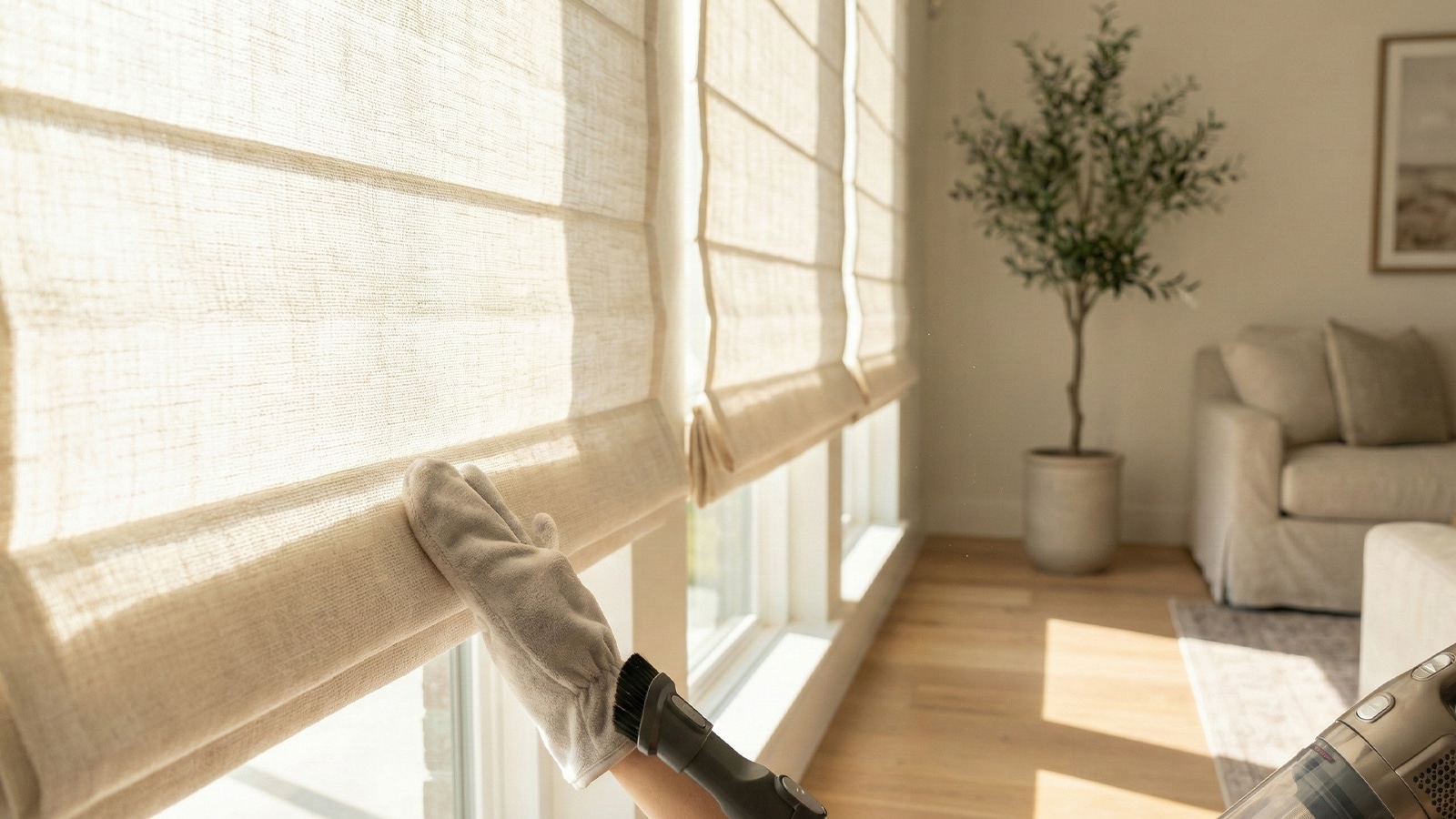
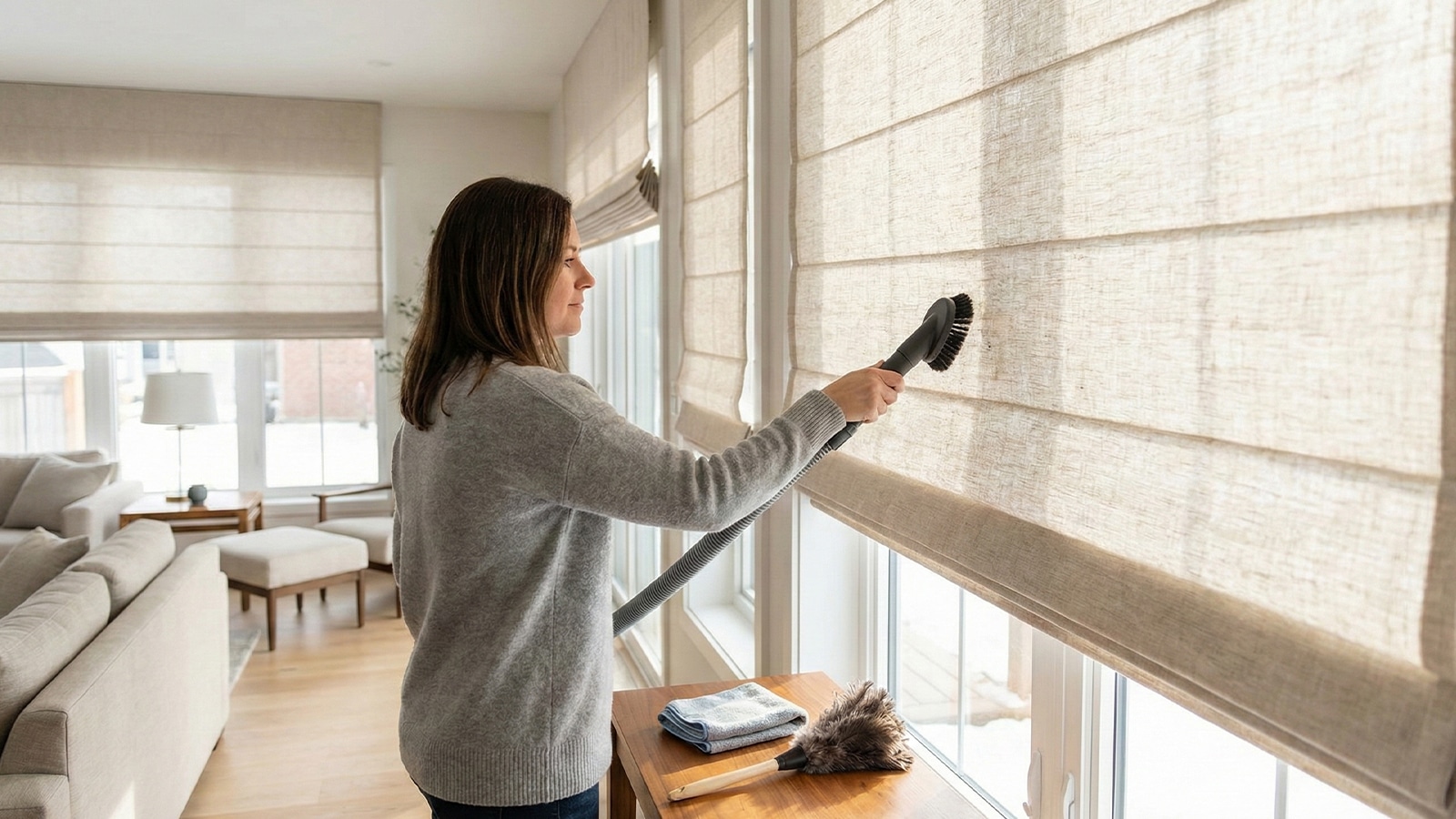
Use a vacuum on low suction with a soft brush attachment. Work from top to bottom in gentle strokes, following the pleat direction on roman or cellular shades. This method removes dust and dirt without stressing fabric fibers. Plan for this weekly if you have pets or live near construction zones.
Dusting with Microfiber Cloths and Feather Dusters
For a quick refresh, use a feather duster or dry microfiber cloth. Start at the top rail and work downward in smooth motions. Microfiber traps particles rather than spreading them around—a major advantage over traditional dusters. This takes under 10 minutes per room and keeps your fabric shades looking presentable.
Spot Cleaning Minor Stains and Marks
Mix lukewarm water with a drop of mild detergent. Dip a damp cloth into the solution, wring it nearly dry, and gently blot (never rub) the stain. Work from the outside edges toward the center to prevent spreading. Rinse with a clean, damp cloth and let air dry completely before raising the blind.
Quick Freshening Between Deep Cleans
For light odors or surface dust, use a fabric cleaner spray designed for upholstery. Hold the bottle 6-8 inches away and mist lightly. Allow 15-20 minutes of drying time with windows open for ventilation. This technique works well for cellular shades where vacuuming might compress the honeycomb structure.
Deep Cleaning Methods (Seasonal or As-Needed)
Twice yearly (or after incidents like cooking splatters), your shades need thorough cleaning. Choose your method based on fabric type and soil level.
Hand Washing Fabric Shades in Bathtub or Large Basin
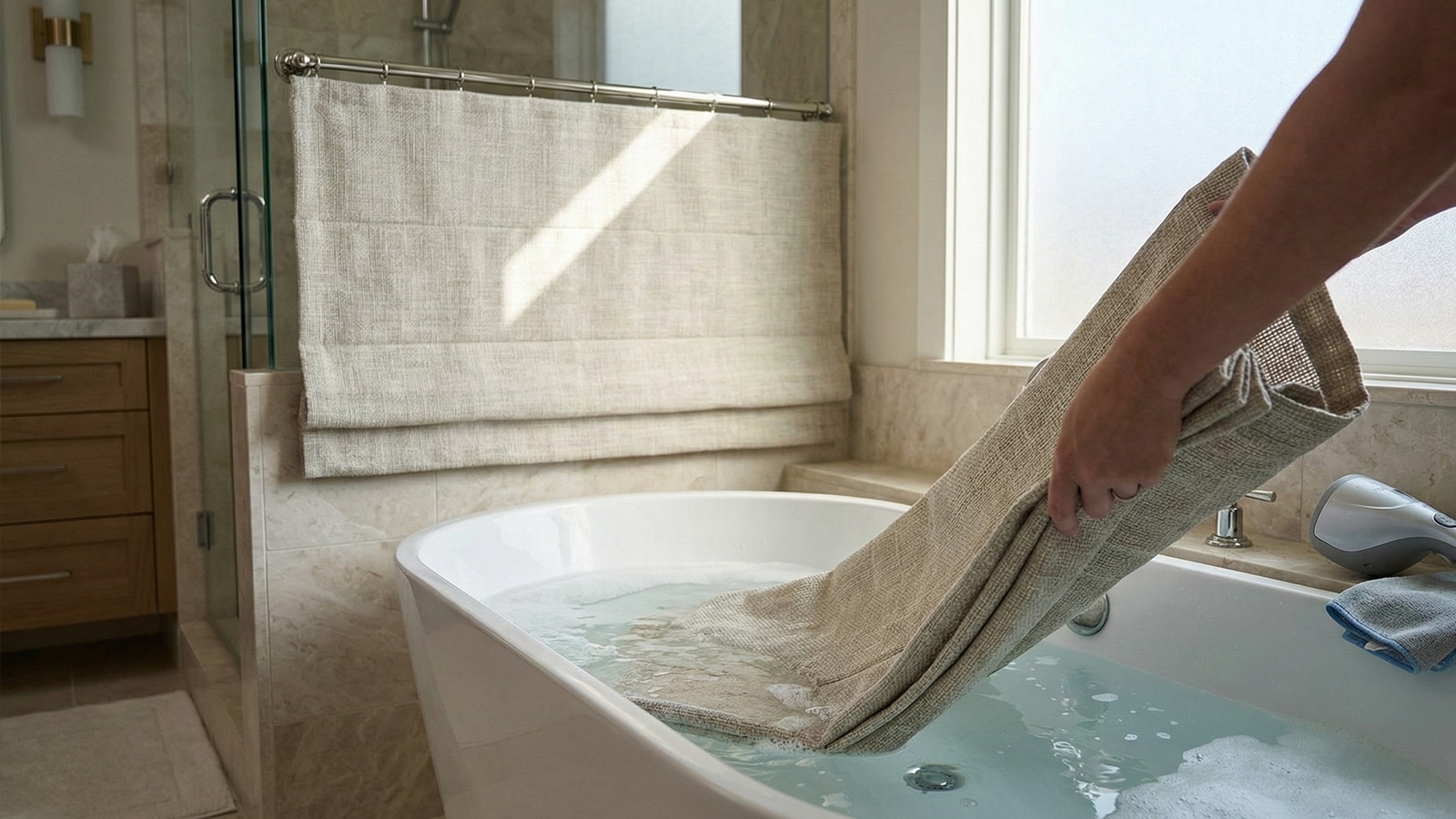
Fill your bathtub with lukewarm water and add mild detergent—about one tablespoon per gallon. Submerge the shade and gently agitate for 3-5 minutes. Avoid twisting or wringing, which distorts the shape. Drain dirty water, refill with clean warm water, and rinse until soap disappears. This works best for cotton roman shades and synthetic roller shades.
Steam Cleaning for Delicate Fabrics
A handheld steamer provides deeper cleaning without soaking delicate materials like silk or velvet. Hold the steamer 6 inches from the fabric surface and work in vertical passes. The heat kills dust mites and releases embedded particles. Follow immediately with a dry microfiber cloth to capture loosened debris.
Dry Cleaning Methods and Solvents (When Water Isn’t Safe)
Some specialty materials require professional dry cleaning or dry-cleaning solvents available at home improvement stores. Apply solvent to a clean cloth (never directly on fabric) and blot stained areas. Work in a well-ventilated space and follow product safety instructions carefully. This prevents water damage on materials like untreated linen or bamboo.
Machine Washing (For Compatible Shade Types Only)
Check labels first—only certain synthetic fabric shades tolerate machine washing. Use gentle cycle, cold water, and place shades in a mesh laundry bag for protection. Skip the spin cycle to prevent permanent creasing. This convenience works well for polyester vertical shades but never for wood blinds or delicate cellular shades.
Drying Techniques to Prevent Damage and Shrinkage
Never use a dryer. Instead, hang shades over a shower rod or clothesline and let them air dry completely—usually 4-6 hours depending on Cypress humidity levels. Reinstall while slightly damp to allow natural stretching back to window size. Direct sunlight can fade colors, so dry in shade when possible.
Cleaning Approaches by Specific Fabric Types
| Fabric Type | Best Cleaning Method | Avoid | Frequency |
|---|---|---|---|
| Cotton/Linen | Hand wash, lukewarm water | Hot water, harsh chemicals | Every 6 months |
| Polyester/Nylon | Vacuum, spot clean, or machine wash | Bleach, high heat | Every 3-4 months |
| Silk/Velvet | Professional cleaning, light steaming | Water, rubbing | Annually |
| Bamboo/Jute | Dry methods only, vacuum | Soaking, excess moisture | Monthly dusting |
| Solar/UV fabrics | Mild soap solution, soft cloth | Abrasive brushes | Every 4-6 months |
Natural Fiber Shades (Cotton, Linen, Bamboo, Jute)
Natural materials breathe beautifully but absorb moisture easily—a concern in humid Cypress. Clean cotton and linen with gentle hand washing, but keep bamboo and jute completely dry. Use a vacuum with low suction or a barely damp cloth for natural fibers. Always test colorfastness first, as natural dyes may run.
Synthetic Fabric Shades (Polyester, Nylon, Acrylic)
Synthetics offer durability and easy maintenance. Most tolerate light scrubbing with warm water and dish soap for stubborn stains. These materials dry quickly and resist mold better than natural options—perfect for Cypress kitchens and bathrooms. You can use a microfiber cloth with cleaning solution more confidently here.
Specialty Materials (Silk, Velvet, Blackout Fabrics)
Luxury fabrics require professional attention to maintain their appearance and functionality. Blackout roller shades often have special coatings that water can damage. At All Prive, we recommend annual professional cleaning for these premium window treatments to keep your blinds looking their best without risking fabric damage.
Sheer and Semi-Sheer Fabrics
Delicate sheers show every water spot and stain. Use distilled water instead of tap water to prevent mineral deposits. Gentle hand washing works well, but handle wet sheers carefully—they’re fragile when saturated. These fabrics also benefit from frequent light dusting to prevent buildup.
Solar and UV-Protective Fabrics
These functional materials often have special treatments that repel dust naturally. Clean them with a soft cloth dampened in mild detergent solution. Avoid harsh cleaners that strip protective coatings. Regular dusting maintains performance while keeping shades looking fresh.
How All Prive is Your Choice for Custom Window Shades in Cypress
When DIY cleaning isn’t enough—or you’re ready to upgrade your window coverings entirely—All Prive serves Cypress, Texas and surrounding communities with luxury window treatment solutions. We specialize in custom fabric shades designed for our local climate, with materials that resist humidity, repel dust, and maintain beauty with minimal maintenance.
Our team provides professional guidance on fabric selection, cleaning schedules, and when professional restoration makes sense versus replacement. Whether you need ultrasonic cleaning for delicate cellular shades or advice on keeping your roman shades looking their best, we bring expertise that protects your investment.
We also offer cleaning tips specific to each installation, teaching you exactly how to care for your particular fabric blinds and shutters. This personalized approach means you’ll know whether your shades need weekly vacuuming or monthly attention—and when to call us for help.
Summary
Learning how to clean fabric window shades properly extends their lifespan and keeps your Cypress home looking polished. Start with regular dusting using a vacuum cleaner with brush attachment or feather duster to remove dust before it embeds in fibers. Progress to spot cleaning with a damp cloth and mild detergent for minor issues, and schedule seasonal deep cleaning using methods appropriate for your specific fabric type.
Remember that Cypress’s climate demands attention to humidity-related problems like mold and mildew. Check your cellular shades, roman shades, and vertical blinds regularly for musty odors or discoloration. Most routine maintenance takes minimal time and uses common household supplies, but don’t hesitate to seek professional cleaning for delicate materials or stubborn stains.
The key to keeping your fabric shades clean and beautiful lies in consistent care rather than occasional intensive effort. By following this guide and knowing when to call experts like All Prive, you’ll protect your window treatment investment while enjoying fresh, attractive fabric blinds year-round.
Frequently Asked Questions
How often should I vacuum my fabric window shades?
Vacuum fabric shades weekly if you have pets or allergies; otherwise monthly suffices for dust control.
Can I use bleach to remove stains from fabric blinds?
Never use bleach on fabric shades; it damages fibers and causes permanent discoloration requiring replacement.
What’s the safest way to clean cellular or honeycomb shades?
Use low-suction vacuuming with a brush attachment; avoid water which damages the honeycomb structure permanently.
How do I prevent mold on fabric shades in Cypress humidity?
Ensure proper ventilation, use dehumidifiers during summer months, and clean shades before moisture becomes visible mold.
When should I choose professional cleaning over DIY methods?
Select professional cleaning for silk, velvet, antique fabrics, warranty concerns, or stains covering large areas.